A Different Approach to Creation
Introducing Vibe Authoring
We felt the need to rethink that process from the ground up.
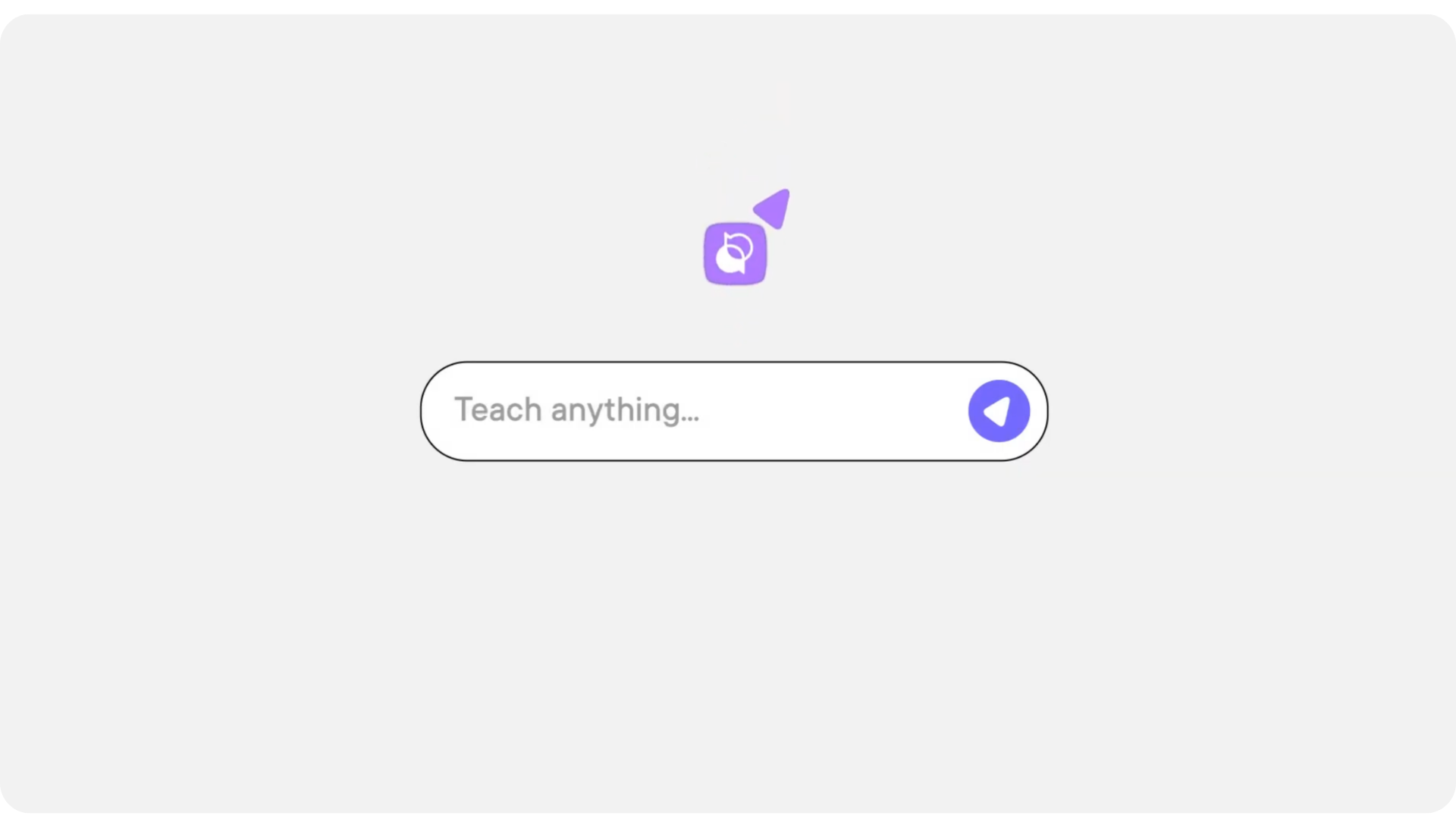
With Vibe Authoring, course creation no longer starts with tools or templates. It starts with intent.
You describe what needs to be taught - the context, the audience, the outcome - and Fabella translates that into a structured, interactive learning experience.
Not a rough outline.
A complete, editable course, built using instructional design principles.
From there, the process becomes iterative and direct. Adjustments happen in place. Changes don’t require rebuilding. The system responds to direction, rather than forcing you through predefined steps.
The result is a workflow that feels less like production - and more like shaping an idea into something usable.
Built for Learning, Not Just Content
Domain-Native
One of the reasons this approach works is because Fabella isn’t a general-purpose system.
It’s designed specifically for learning.
That means it understands how training should be structured - how objectives connect to activities, how interaction supports understanding, and how content needs to adapt to different contexts.
It also means the output is more than surface-level.
Courses are built with structure, flow, and application in mind. They’re designed to function inside real environments - including LMS integrations, completion tracking, and performance measurement.
From Fragmentation to Flow
Closed Creation Loop
Another major shift is how the process itself is handled.
In most setups, course creation is fragmented. Planning, drafting, building, reviewing, and publishing happen across different tools and stages. Each step introduces friction. Each transition slows things down.
With Vibe Authoring, that creation loop is unified.
The same environment supports the full process. Ideas become the structure. Structure becomes the experience. Changes happen continuously, without needing to move between systems or rework previous steps.
This obviously saves time, but it also preserves momentum - which is often the difference between something that gets finished, and something that actually gets done well.
Engagement Isn’t an Add-On
Format Intelligence
One of the most persistent issues in training is engagement.
Not because teams don’t care about it - but because it’s difficult to build.
Creating interactive, varied learning experiences typically requires time, technical expertise, and effort that many teams don’t have. So engagement becomes something that’s simplified, postponed, or left out entirely.
Vibe Authoring changes that by making interaction part of the structure itself.
Fabella selects and builds appropriate formats based on the context of the training. This includes scenario-based learning, branching paths, rapid knowledge checks, and audio-led experiences.
These elements aren’t layered on top.
They’re integrated into how the course is constructed.
Which means the experience feels coherent - not assembled.
Control Without the Overhead
Visual Editor
Speed often comes at the expense of control.
That trade-off doesn’t hold here.
Courses generated through Vibe Authoring remain fully editable. A visual, node-based editor allows every part of the experience to be reviewed, adjusted, or expanded.
You can work directly in the structure. You can refine through conversation. Or combine both approaches as needed.
The system builds on your input.
What This Actually Changes
When the process of creating training becomes faster and more structured by default, a few things start to shift.
Production timelines shrink, without reducing quality. Updates become manageable, instead of avoided. More training gets created, and more of it is usable.
But more importantly, the focus moves away from managing tools and timelines, and toward designing effective, delightful learning.
Vibe Authoring is being introduced through a closed release, shaped by teams already building training in real environments.
Their feedback has informed what’s here now, and will continue to shape what comes next. This is a shift in how training gets created, and with that input, they’re building the tools that will work for them.
If you would like to build with us, join the waitlist, or get an invite from someone who is.